
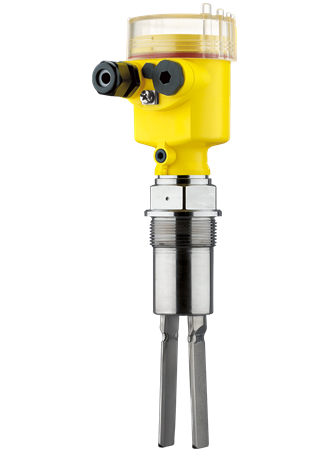
A Vibrating Level Switch is a level detection device used to monitor the presence or absence of liquids and bulk solids in tanks, silos, and vessels. It operates using a vibrating fork or rod that changes its vibration frequency when covered by the material being measured.
Working Principle:
| Parameter | Description |
|---|---|
| Device Type | Point level switch |
| Operating Principle | Vibration frequency/amplitude detection |
| Sensing Element | Vibrating fork or rod |
| Power Supply | Typically 12–36 V DC or 85–265 V AC (model dependent) |
| Output | Relay, PNP/NPN, or 4–20 mA switch output |
| Measured Media | Liquids, powders, granules, and bulk solids |
| Mounting | Side or top mounted |
| Applications | Storage tanks, silos, hoppers, chemical and food industries |
