
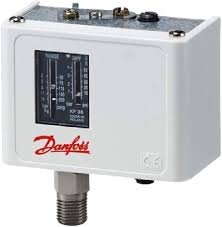
A Pressure Switch is an electromechanical or electronic device used to monitor pressure and automatically open or close an electrical contact when a preset pressure level is reached.
It senses the pressure of a liquid, gas, or steam and converts the pressure change into a switching action. When the pressure rises above or falls below the setpoint, the switch activates or deactivates connected equipment such as pumps, compressors, alarms, valves, or control systems.
Pressure switches are commonly used for:
A sensing element (diaphragm, piston, or Bourdon tube) detects pressure changes and mechanically or electronically actuates a switch contact. The switching point can usually be adjusted to the desired pressure level.
A Pressure Switch is a pressure-operated control device that automatically switches electrical contacts ON or OFF when a preset pressure value is reached, helping protect equipment and automate industrial processes.
| Parameter | Specification |
|---|---|
| Type | Mechanical / Electronic |
| Function | ON/OFF switching based on pressure |
| Pressure Range | Vacuum to 600 bar (model dependent) |
| Sensing Element | Diaphragm / Piston / Bourdon tube |
| Output | SPDT / DPDT switch contact |
| Contact Rating | 5–15 A, 230 VAC |
| Set Point | Adjustable |
| Accuracy | ±1% to ±2% FS |
| Process Connection | 1/4″, 1/2″ BSP/NPT |
| Material | Brass / SS304 / SS316 |
| Protection | IP54 to IP67 |
| Applications | Pumps, compressors, boilers, HVAC, water systems |
