
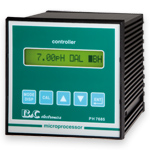
ORP is a measure of how strongly a solution can oxidize or reduce other substances. In simple terms, it tells you whether a liquid environment is more likely to accept electrons (oxidizing) or donate electrons (reducing).
ORP is widely used to monitor:
ORP is not about the amount of a specific chemical—it’s about the overall electron in a solution, which indicates how reactive and clean (or contaminated) the environment may be.
| Parameter | Specification |
|---|---|
| Measurement Principle | Oxidation-Reduction Potential (Redox) |
| Measurement Range | -2000 mV to +2000 mV (typical) |
| Resolution | 1 mV |
| Accuracy | ±1 mV or ±0.2% of reading |
| Response Time | ≤30 seconds (90% response) |
| Sensor Type | Platinum electrode with Ag/AgCl reference |
| Temperature Compensation | Manual or Automatic (ATC), depending on model |
| Operating Temperature | 0 to 60°C |
| Pressure Rating | Up to 6 bar (varies by sensor) |
| Body Material | Glass, Epoxy, or PVDF |
| Cable Length | 3 m, 5 m, or 10 m (optional) |
| Process Connection | ½” NPT, ¾” NPT, PG13.5, or flange (model dependent) |
| Output | mV signal, 4–20 mA, RS-485 (Modbus), or digital (depending on transmitter) |
| Power Supply (Transmitter) | 12–24 V DC or 100–240 V AC |
| Display | LCD/LED (for meter/transmitter models) |
| Calibration | Single-point using ORP standard solution (e.g., 220 mV or 468 mV) |
| IP Rating | IP65 to IP68 (depending on installation) |
| Applications | Water treatment, wastewater, swimming pools, aquaculture, chemical processing, food & beverage |
