
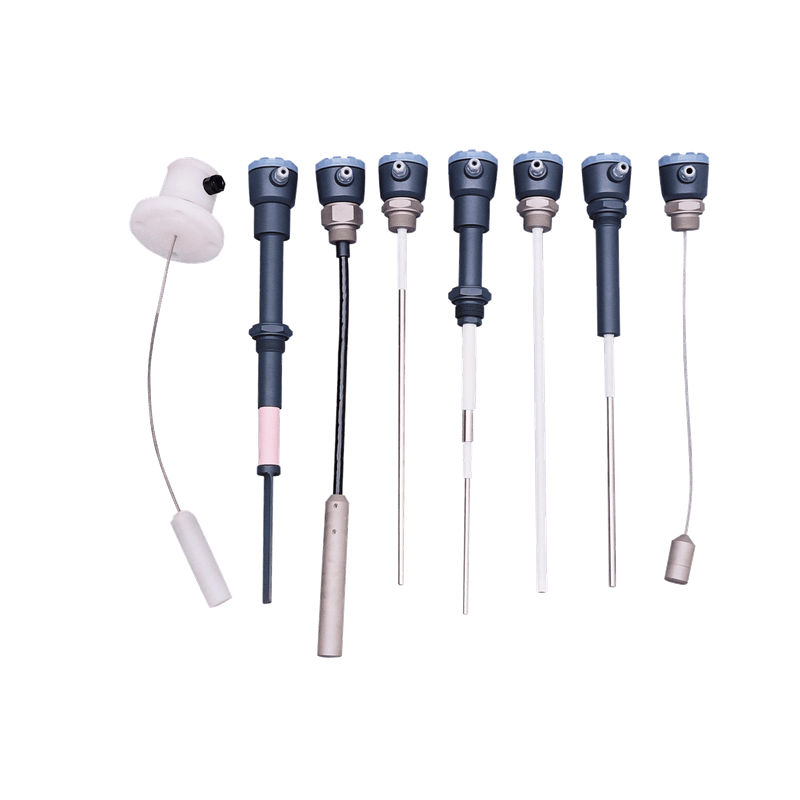
A Capacitance Level Switch is an electronic level sensing device used to detect the presence or absence of liquids, powders, granules, and other materials in tanks or vessels. It operates by measuring changes in capacitance between the probe and the tank wall (or a reference electrode).
Working Principle:
| Parameter | Description |
|---|---|
| Device Type | Point level switch |
| Operating Principle | Capacitance change detection |
| Sensing Element | Conductive probe/electrode |
| Power Supply | Typically 12–36 V DC or 85–265 V AC (model dependent) |
| Output | Relay, PNP/NPN, or transistor output |
| Measured Media | Liquids, powders, granules, and bulk solids |
| Mounting | Top or side mounted |
| Applications | Chemical tanks, food processing, water treatment, silos |
| Advantages | No moving parts, suitable for various materials, low maintenance |
